Orla Mining Announces Results of the Updated Feasibility Study and Approves Start of Construction Spending for the South Railroad Project
Strong Results Deliver NPV
5%
of
Confirming Orla's Next
All amounts expressed in
- Completion of Optimized Feasibility Study and Project Approval: Orla will now transition to the execution phase, beginning with pre-construction spending for detailed engineering, construction readiness activities, and long-lead procurement. Full construction is expected to begin in mid-2026, following receipt of the final project permits.
-
Robust Economics: The Study reaffirms
South Railroad's strong economics, supported by consistent production and high margins.- NPV5% is
$783 million and 48% IRR at$3,100 gold price (after-tax). - NPV5% is
$1.7 billion and 95% IRR at$4,500 gold price (after-tax)[1].
- NPV5% is
-
Strong Production Profile and Robust Margins: Average annual gold production of 130,000 ounces over the first five years at an average All-in Sustaining Cost ("AISC")[2] of
$1,485 /oz. -
Clear Permitting Pathway to Construction: The Project is advancing through federal and state approvals, with the BLM Record of Decision targeted for mid-2026. As a
FAST-41 Covered Project under NEPA, the Company expects a coordinated and transparent federal permitting process. -
Optimized and Construction-Ready: Significant engineering work, contractor and supplier engagement, and project optimizations have been completed, forming the basis for the initial capital cost estimate of
$395 million . Project enhancements include a two-stage crushing circuit and improvements to the overall development scope. - Fully Funded Pathway: Development of the Project will be financed through operating cash flow and cash on hand.
-
Strategic Growth Catalyst:
South Railroad will become Orla's third operating mine, expected to increase consolidated annual production to close to 500,000 ounces and solidifying the Company's position inNorth America . - South Carlin Complex Offers Significant District Scale Growth beyond this Study: Measured and Indicated Mineral Resources have increased since acquisition by 206,000 ounces in oxide and 469,000 ounces in sulphide, marking the beginning of the resource expansion. With a strong mineral endowment and Orla's commitment to exploration and deeper geological understanding, the district presents clear potential for mine life extensions and new discoveries across existing resources and priority targets.
"This optimized
-
Table 1: South Railroad Feasibility Study Summary
|
Feasibility Study Summary (At |
Units |
Values |
|
Ore Mined |
M tonnes |
66.6 |
|
Waste Mined |
M tonnes |
266.8 |
|
Total Tonnes Mined |
M tonnes |
333.4 |
|
Strip Ratio |
w:o |
4.0 |
|
|
years |
10 |
|
|
|
|
|
LOM Run of Mine (ROM) - Processing |
M tonnes |
33.7 |
|
LOM Two-Stage Crush - Processing |
M tonnes |
33.0 |
|
Total Ore to Leach Pad |
M tonnes |
66.6 |
|
Throughput - ROM Avg Per Day |
tpd |
10,100 |
|
Throughput - Two- Stage Crush Avg Per Day |
tpd |
9,900 |
|
Gold Grade (Average) |
(g/t) |
0.71 |
|
|
(g/t) |
5.1 |
|
Contained Gold |
ounces |
1,516,332 |
|
Contained Silver |
ounces |
6,194,776 |
|
Average Gold Recovery |
% |
71 % |
|
Average Silver Recovery |
% |
12 % |
|
Recovered Gold |
ounces |
1,072,306 |
|
Recovered Silver |
ounces |
760,005 |
|
Average Annual Gold Production (first 10 years) |
ounces |
103,756 |
|
Operating Costs (Average LOM) |
|
|
|
Mining |
$/t mined |
|
|
Processing & Support |
$/t mined |
|
|
General & Administrative |
$/t mined |
|
|
Refining |
$/t mined |
|
|
Total Operating Cost |
$/t mined |
|
|
|
|
|
|
Total Cash Cost2 (net of by-product credits) |
$/ounce Au |
|
|
AISC2 |
$/ounce Au |
|
|
Capital Costs (Excluding value added tax) |
|
|
|
|
$ million |
|
|
Life of |
$ million |
|
|
Working Capital |
$ million |
|
|
Closure Costs |
$ million |
|
|
Financial Evaluation (Base Case) |
|
|
|
Gold Price Assumption |
$/ounce |
|
|
Silver Price Assumption |
$/ounce |
|
|
Average Annual Cashflow (Pre-Tax) |
$ million |
|
|
Average Annual Cashflow (After-Tax) |
$ million |
|
|
IRR, Pre-Tax |
% |
55 % |
|
IRR, After-Tax |
% |
48 % |
|
NPV @ 5% (Pre-Tax) |
$ million |
|
|
NPV @ 5% (After-Tax) |
$ million |
|
|
Pay-Back Period (After-Tax) |
years |
2.0 |
Table 2: Feasibility Study Sensitivity Analysis
|
Gold Price ($/oz) |
|
|
|
|
|
|
|
After-tax NPV 5% ($M) |
|
|
|
|
|
|
|
After-tax IRR (%) |
10 % |
28 % |
48 % |
61 % |
78 % |
95 % |
|
Payback (years) |
4.9 |
3.1 |
2.0 |
1.5 |
1.1 |
0.9 |
The updated Feasibility Study was prepared by a team of independent industry experts who are qualified persons as defined under NI 43-101, led by M3 Engineering ("M3") and supported by NewFields Mining Design and Technical Services ("NewFields"), Forte Dynamics ("Forte"), Stantec,
The updated Feasibility Study was conducted using a base case gold and silver price of
The Mineral Reserve estimate at
The total Measured and Indicated Mineral Resource is 105.9 million tonnes at 0.72 g/t gold, resulting in an estimated 2.46 million ounces of gold. In addition, the Pinion deposit contains 7.4 million ounces of silver from 50.7 million Measured and Indicated tonnes at 4.6 g/t silver. The Inferred Mineral Resource totals 55.7 million tonnes at 0.56 g/t gold, resulting in an estimated 1.01 million ounces of gold. In addition, the Pinion deposit contains 0.1 million ounces of silver from 1.3 million Inferred tonnes at 2.65 g/t silver. Mineral Resources are inclusive of Mineral Reserves.
Further details on the Mineral Resource and Mineral Reserve estimates are provided below under "South Railroad Technical Report Summary Information".
Operating costs are based on Orla-performed mining, with all mine components being financed or owned by the Company. Capital cost estimates are based on a combination of material takeoffs (MTOs), vendor quotations, database pricing, Engineering, Procurement, Construction Management ("EPCM")-awarded contract values, and allowances. The scope and costs related to mechanical and electrical equipment is well-defined with 67% of those costs supported by firm vendor quotes.
The updated FS reflects an optimized and more advanced, construction-ready project than the previous Feasibility Study published in 2022 (the "2022 FS"). Advanced engineering, vendor pricing, and execution plans inform the FS and enhance the overall confidence in delivery. Key optimizations are highlighted below, and the associated cost movements are outlined in the Capital Cost section.
-
Revised Processing Flowsheet – Two-stage Crushing Added:
The optimized FS replaces the run-of-mine ("ROM")-only approach in the 2022 FS with a two-stage crushing circuit for a significant portion of the ore, improving recovery confidence and reducing metallurgical risk identified in the earlier study.
-
Updated Metallurgical Recoveries Based on Expanded Test Work:
The recovery model reflects 187 column tests completed since 2022, simplifying ore types and incorporating new data for Pinion East and Dark Star North. The updated model provides higher confidence in both crushed and ROM performance.
-
Enhanced Water Management and Site Infrastructure Design:
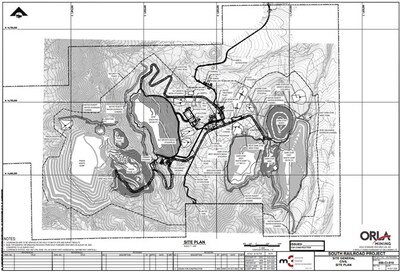
The updated scope includes redesigned water supply systems, updated hydrogeological information, and refined site infrastructure layouts to support operational reliability and reduce environmental risk. See Figure 1 in the Appendix for Site Plan Layout.
-
Transition to an
Execution-Ready Project :
The FS incorporates detailed engineering, a defined project delivery model, EPCM engagement, long-lead procurement planning, and construction sequencing to support the transition into execution. This level of planning and detail was not included in the 2022 FS.
The updated capital cost estimate reflects a significantly more advanced and construction-ready project compared to the 2022 FS, which estimated initial capital of
Key variances in initial capital costs from the FS in comparison to the 2022 FS include:
-
$46 million related to inflationary cost escalation; -
$101 million in direct cost additions, primarily reflecting the inclusion of a two-stage crushing system (previously ROM only) and updated water management systems; -
$33 million in indirect costs associated with the crushing system and water circuit; and -
$25 million in additional contingency more reflective of a project of this study level.
Table 3: Capital Cost Summary (excl. value added tax)
|
Description |
Cost (US$m) |
|
Process Facilities (Adsorption, Desorption, and Recovery ("ADR")/Refinery) |
48.2 |
|
Crushing & Stacking |
47.1 |
|
Heap Leach Facility |
20.7 |
|
Mining & Waste Rock Disposal Facilities |
60.7 |
|
Power Systems |
16.4 |
|
Site Water Management Infrastructure & Treatment |
62.4 |
|
Ancillaries |
24.3 |
|
Indirects |
57.1 |
|
Owner's Costs |
10.8 |
|
Contingency |
47.0 |
|
|
394.7 |
|
Working Capital & Initial Fills |
6.9 |
|
Sustaining Capital – Mine & Process |
202.3 |
|
|
603.9 |
|
Closure Costs |
29.2 |
The initial capital cost of
Operating costs for the feasibility study were estimated by RESPEC (mine development) and M3 (process plant, site development, power generation, and ancillaries), Stantec (site-wide water management systems), NewFields (heap leach and waste rock disposal facilities) and Linkan Engineering (water treatment plant and potable water systems).
Mine operating costs were estimated using first principles. This was done using estimated hourly costs of equipment and personnel against the anticipated hours of work for each. The equipment hourly costs were estimated for fuel, oil, and lubrication, tires, undercarriage, repair and maintenance costs, and special wear items.
Process operating costs have been estimated by M3 from first principles.
Operating costs were estimated based on third quarter 2025 US dollars and are presented with no added contingency based upon the design and operating criteria. Operating costs are considered to have an accuracy of +/- 15%.
Operating costs estimates have been based upon information obtained from the following sources:
- Project metallurgical test work and process engineering;
- Development of a detailed equipment list and demand calculations;
- M3 in-house data for reagent pricing; and
- Experience with other similar operations.
Table 4: Operating Cost Summary
|
Description |
LOM Costs |
LOM Costs |
|
$/t (Ore) |
$/oz |
|
|
Mining |
12.25 |
761 |
|
Process |
4.54 |
282 |
|
G&A |
1.21 |
75 |
|
Total Operating Costs |
18.00 |
1,118 |
|
Refining & Transport |
0.03 |
2 |
|
Royalties |
1.46 |
91 |
|
By-product Credits |
(0.06) |
(4) |
|
Total Cash Costs (net of by products) 2 |
19.43 |
1,207 |
|
Sustaining Capital |
2.79 |
173 |
|
Reclamation |
0.44 |
27 |
|
Net Proceeds and Excise Tax |
1.56 |
97 |
|
AISC 2 |
24.22 |
1,505 |
Mineral Resources were estimated for
Since the 2022 FS, which was completed by
Table 5: South Railroad Mineral Reserves (
|
Category |
Tonnage |
Grades |
Contained Metal |
||
|
(kt) |
Au (g/t) |
Ag (g/t) |
Gold (koz) |
Silver (koz) |
|
|
Proven |
10,585 |
1.04 |
6.56 |
354 |
445 |
|
Probable |
56,033 |
0.65 |
5.00 |
1,162 |
5,749 |
|
Proven and Probable |
66,618 |
0.71 |
5.08 |
1,516 |
6,195 |
|
Notes: |
|
|
1. |
The estimate of Mineral Reserves was done by Thomas L. Dyer, PE of RESPEC. |
|
2. |
Mineral Reserves are classified in accordance with |
|
3. |
Mineral Reserves are reported based on gross metal value (GMV) cutoff grades based on gold prices of |
|
4. |
Economic parameters and recoveries will be described in the South Railroad Technical Report. |
|
5. |
As Mineral Reserves were defined using lower metal prices compared to the economic analysis that supports them, resulting Proven and Probable Mineral Reserves are justified. |
|
6. |
Rounding may result in apparent discrepancies between tons, grade, and contained metal content. |
|
7. |
Cutoff grades are applied by material type as will be described in the South Railroad Technical Report. |
|
8. |
Proven and Probable Mineral Reserves for Pinion include silver as reported above; |
|
9. |
Silver Mineral Reserves apply to Pinion only, and silver grade is based on Pinion tonnes |
Table 6: South Carlin Mineral Resources
|
Category |
Tonnage |
Grades |
Contained Metal |
||
|
(kt) |
Au (g/t) |
Ag (g/t) |
Gold (koz) |
Silver (koz) |
|
|
Mineral Resources - |
|||||
|
Measured |
13,609 |
0.92 |
6.05 |
401 |
509 |
|
Indicated |
92,296 |
0.69 |
4.48 |
2,058 |
6,915 |
|
Measured + Indicated |
105,905 |
0.72 |
4.56 |
2,459 |
7,424 |
|
Inferred |
20,298 |
0.8 |
2.65 |
519 |
111 |
|
Mineral Resources - |
|||||
|
Inferred |
35,417 |
0.43 |
|
493 |
|
|
Total South Carlin Resources |
|||||
|
Measured |
13,609 |
0.92 |
6.05 |
401 |
509 |
|
Indicated |
92,296 |
0.69 |
4.48 |
2,058 |
6,915 |
|
Measured + Indicated |
105,905 |
0.72 |
4.56 |
2,459 |
7,424 |
|
Inferred |
55,716 |
0.56 |
2.65 |
1,012 |
111 |
|
Notes - |
|
|
1. |
The estimate of Mineral Resources was done by |
|
2. |
In-situ Mineral Resources are classified in accordance with CIM Standards. |
|
3. |
The base cases for all mineral resources are reported at a gold price of |
|
4. |
Tabulations comprise all model blocks at variable cutoff grades for oxide/transitional and sulphide materials within the |
|
5. |
Recoveries are calculated within each block model, and vary by deposit, ore-type, redox state, sulphide-sulfur and inorganic-carbon content, and gold and silver grade. |
|
6. |
The average grades of the tabulations are comprised of the weighted average of block-diluted grades within the optimized pits. |
|
7. |
Mineral Resources that are not Mineral Reserves do not have demonstrated economic viability. |
|
8. |
Rounding may result in apparent discrepancies between tons, grade, and contained metal content. |
|
9. |
Silver Mineral Resources from Pinion only, silver grade is based on Pinion tonnes. |
|
Notes - Pony Creek Resources: |
|
|
1. |
The estimate of Mineral Resources was completed by |
|
2. |
Mineral Resources that are not Mineral Reserves do not have demonstrated economic viability. |
|
3. |
There are no known legal, political, environmental or other risks that could materially affect the potential development. |
|
4. |
The Inferred Mineral Resource in this estimate has a lower level of confidence and must not be converted to a Mineral Reserve. It is reasonably expected that the majority of the Inferred Mineral Resource could potentially be upgraded to an Indicated Mineral Resource with continued exploration. |
|
5. |
|
|
6. |
The reported open-pit Mineral Resources utilize a cutoff of 0.103 Au g/t Au for heap leach and 0.17 Au g/t for vat leach material. |
|
7. |
Economic assumptions used include |
|
8. |
The base cases for all Mineral Resources have an effective date of |
|
9. |
The constraining pit optimization parameters included a mining cost of |
Mining at
All leach material will be placed on the heap leach pad, with crushed ore temporarily stockpiled to decouple crushing and stacking activities and provide operational flexibility. The processing schedule incorporates both ROM and crushed heap leach material, with a maximum combined processing rate of approximately 29,940 tonnes per day, or 10.9 million tonnes per year, allowing the operation to balance throughput, recovery, and operating efficiency.
The FS assumes Orla-operated mining, supported by a fleet of primary mining equipment including drills, loaders, hydraulic shovels, and 200-ton (181 tonne) capacity haul trucks. This approach provides Orla with direct control over mining performance, cost management, and scheduling. Capital costs reflect a financing option of the major mining equipment purchases.
Life-of-mine ("LOM") average gold recovery across the
Overall, the mining plan reflects an executable, low-risk approach that supports strong economics and operational flexibility.
Project infrastructure for
Mine water requirements will be met primarily through groundwater dewatering associated with the
The primary access to the
Key facilities have been strategically located on the site layout to optimize material handling, access, and operational safety. The heap leach facility is situated northeast of the Pinion pit, with gravity flow of pregnant leach solution to the adjacent process ponds, and controlled access for both ROM placement and initial ore stacking.
Centralized mine infrastructure includes a truck shop and maintenance complex, fuel and warehousing facilities, administration and security buildings along the main access road, and an on-site ADR plant and refinery for gold and silver recovery. Supporting facilities include a laboratory, training areas, potable water treatment plant, and site services facilities.
At the state level, the Company has secured Class I and II Air Operating Permits, while water-related applications continue to progress with the
The BLM's Record of Decision (the final permitting decision) is targeted for mid-2026.
Orla has defined a clear and actionable execution path to advance
Detailed engineering is well underway and M3 has ramped up its team alongside Orla's Owner's Team to finalize construction planning and readiness activities. Long-lead procurement activities are also advancing with key awards beginning in early 2026.
Construction activities are expected to commence in mid-2026, subject to the receipt of final permits and regulatory authorization and is expected to be completed in approximately 18 months.
Orla, M3 and the supporting consultants will work in an integrated manner to ensure seamless alignment between design, construction and the future operations. Operational readiness is being embedded across all workstreams with progressive onboarding of Orla's operations personnel to enable an efficient transition through commissioning and into steady-state operations.
Orla will continue to apply its ESG framework throughout the design and execution of the Project with a focus on environmental management, workforce safety, and constructive engagement with local and regional stakeholders. These priorities are being incorporated into all aspects of the designs and plans to ensure the Project is developed responsibly and in alignment with Orla's long-term sustainability objectives.
The southern part of the property, extending from Jasperoid Wash to the
In 2025, Orla executed an 18,000-metre drill program focused on strengthening geological understanding, refining models, expanding and upgrading resources at
Over the past three years, including 2025, Orla has completed 57,800 metres of drilling in 266 holes, systematically testing priority targets to delineate extensions of known deposits, discover new oxide zones, confirm historical results, and refine geological models. This disciplined exploration strategy has confirmed the district scale potential of the
Sampling and assay data from the drill core are monitored through a quality assurance–quality control ("QA/QC") program designed to follow industry best practices.
The independent Qualified Persons for the Mineral Resource estimate,
Technical Report
Additional supporting details regarding the information in this news release will be provided in the new independent technical report for
The scientific and technical information in this news release related to the Study were provided, reviewed and approved by the authors listed in Table 7, who are Qualified Persons as defined under NI 43-101.
All other scientific and technical information in this news release was also reviewed and approved by Mr.
Table 7: 2026 Feasibility Study Qualified Person
|
QP Name |
Company |
Qualification |
Main Area of Responsibility |
|
|
|
P.E. |
Lead author, infrastructure, costing (except mining) and economic analysis |
|
|
|
P.E. |
Recovery methods – Process plant |
|
|
|
CPG |
Mineral Resources, geology and exploration (except |
|
|
|
P.E. |
Mineral Reserves |
|
|
|
SME-RM, QP |
Mining methods and mining costs |
|
Ray Walton |
|
P.E. |
Metallurgical testing |
|
|
|
QP-MMSA, RG, PG |
Environment, permitting, and social |
|
|
APEX |
MSc, |
Mineral Resources ( |
|
|
APEX |
|
Geology and exploration ( |
Orla's corporate strategy is to acquire, develop, and operate mineral properties where the Company's expertise can substantially increase stakeholder value. The Company has three material projects, consisting of two operating mines and one development project, all 100% owned by the Company: (1)
For further information, please contact:
President & Chief Executive Officer
Vice President, Investor Relations & Corporate Development
www.orlamining.com
info@orlamining.com
South Railroad Technical Report Summary Information:
The mineral reserves and mineral resources estimate shown here has an effective date of
Mineral Reserves
|
|
Kt |
g Au/t |
|
|
Proven |
8,472 |
1.12 |
304 |
|
Probable |
20,253 |
0.70 |
456 |
|
Total Reserves |
28,726 |
0.82 |
761 |
|
Pinion |
Kt |
g Au/t |
|
g Ag/t |
|
|
Proven |
2,113 |
0.73 |
50 |
6.56 |
445 |
|
Probable |
35,779 |
0.61 |
706 |
5.00 |
5,749 |
|
Total Reserves |
37,892 |
0.62 |
756 |
5.08 |
6,195 |
|
|
Kt |
g Au/t |
|
|
Proven |
10,585 |
1.04 |
354 |
|
Probable |
56,033 |
0.65 |
1,162 |
|
Total Reserves |
66,618 |
0.71 |
1,516 |
|
Notes: |
|
|
1. |
The estimate of Mineral Reserves was done by Thomas L. Dyer, PE of RESPEC. |
|
2. |
Mineral Reserves are classified in accordance with CIM Standards and are recognized at the point process feed. |
|
3. |
Mineral reserves are reported based on gross metal value (GMV) cutoff grades based on gold prices of |
|
4. |
Economic parameters and recoveries will be described in the South Railroad Technical Report. |
|
5. |
As Mineral Reserves were defined using lower metal prices compared to the economic analysis that supports them, resulting Proven and Probable Mineral Reserves are justified. |
|
6. |
Rounding may result in apparent discrepancies between tons, grade, and contained metal content. |
|
7. |
Cutoff grades are applied by material type as will be described in the South Railroad Technical Report. |
|
8. |
Proven and Probable Mineral Reserves for Pinion include silver as reported above; |
|
9. |
Silver Mineral Reserves apply to Pinion only, and silver grade is based on Pinion tonnes. |
Mineral Resources
Oxide
|
Dark Star Mineral Resources |
Kt |
g/t Au |
K oz Au |
g/t Ag |
|
|
Measured – |
10,992 |
0.96 |
340 |
|
|
|
Indicated – |
29,177 |
0.61 |
573 |
|
|
|
Measured + Indicated – |
40,169 |
0.71 |
913 |
|
|
|
Inferred – |
1,287 |
0.41 |
17 |
|
|
|
Pinion Mineral Resources |
Kt |
g/t Au |
|
g/t Ag |
|
|
Measured – |
2,616 |
0.73 |
61 |
6.05 |
509 |
|
Indicated – |
48,062 |
0.56 |
871 |
4.48 |
6,915 |
|
Measured + Indicated – |
50,678 |
0.57 |
932 |
4.56 |
7,424 |
|
Inferred – |
1,302 |
0.41 |
17 |
2.65 |
111 |
|
Jasperoid Wash Mineral Resources |
Kt |
g/t Au |
K oz Au |
g/t Ag |
|
|
Indicated – |
5,635 |
0.31 |
57 |
|
|
|
Inferred – |
10,057 |
0.25 |
82 |
|
|
|
North Bullion Deposits Mineral Resources |
Kt |
g/t Au |
|
g/t Ag |
|
|
North Bullion Indicated - |
149 |
0.27 |
1 |
|
|
|
North Bullion Inferred - |
218 |
0.36 |
3 |
|
|
|
POD/SH/SL Indicated – |
2,512 |
0.69 |
56 |
|
|
|
POD/SH/SL Inferred – |
2,920 |
0.56 |
53 |
|
|
|
ALL OXIDE |
Kt |
g/t Au |
K oz Au |
g/t Ag |
K oz Ag |
|
Measured |
13,609 |
0.92 |
401 |
6.05 |
509 |
|
Indicated |
85,534 |
0.57 |
1,558 |
4.48 |
6,915 |
|
Measured + Indicated |
99,143 |
0.61 |
1,959 |
4.56 |
7,424 |
|
Inferred |
15,784 |
0.34 |
172 |
2.65 |
111 |
Sulphide
|
Dark Star Mineral Resources |
Kt |
g/t Au |
|
g/t Ag |
|
|
Measured – |
|
|
|
|
|
|
Indicated - |
1,373 |
2.09 |
92 |
|
|
|
Measured + Indicated – |
1,373 |
2.09 |
92 |
|
|
|
Inferred - |
|
|
|
|
|
|
Inferred - Underground |
345 |
3.72 |
41 |
|
|
|
North Bullion Deposits Mineral Resources |
Kt |
g/t Au |
|
g/t Ag |
|
|
North Bullion Indicated - |
4,983 |
2.31 |
370 |
|
|
|
North Bullion Inferred - |
3,592 |
2.17 |
251 |
|
|
|
North Bullion Inferred - Underground |
381 |
3.17 |
39 |
|
|
|
POD/SH/SL Indicated – |
406 |
2.91 |
38 |
|
|
|
POD/SH/SL Inferred – |
169 |
2.76 |
15 |
|
|
|
ALL SULPHIDE |
Kt |
g/t Au |
|
g/t Ag |
|
|
Measured |
|
|
|
|
|
|
Indicated |
6,672 |
2.30 |
500 |
|
|
|
Measured + Indicated |
6,672 |
2.30 |
500 |
|
|
|
Inferred |
4,514 |
2.39 |
347 |
|
|
|
Notes - |
|
|
1. |
The estimate of Mineral Resources was done by |
|
2. |
In-situ Mineral Resources are classified in accordance with CIM Standards. |
|
3. |
The base cases for all Mineral Resources are reported at a gold price of |
|
4. |
Tabulations comprise all model blocks at variable cutoff grades for oxide/transitional and sulphide materials within the |
|
5. |
Recoveries are calculated within each block model, and vary by deposit, ore-type, redox state, sulphide-sulfur and inorganic-carbon content, and gold and silver grade. |
|
6. |
The average grades of the tabulations are comprised of the weighted average of block-diluted grades within the optimized pits. |
|
7. |
Mineral Resources that are not Mineral Reserves do not have demonstrated economic viability. |
|
8. |
Rounding may result in apparent discrepancies between tons, grade, and contained metal content. |
|
9. |
Silver resources from Pinion only, silver grade is based on Pinion tonnes. |
Pony Creek Estimated Mineral Resources
|
Pony Creek Mineral Resources |
Material Type |
Kt |
Au |
Au |
|
(kmt) |
(g/t) |
(koz) |
||
|
Bowl Inferred – |
Heap Leach |
3,298 |
0.50 |
53 |
|
VAT Leach |
19,763 |
0.50 |
317 |
|
|
Appaloosa Inferred – |
Heap Leach |
9 |
0.28 |
0 |
|
VAT Leach |
3,541 |
0.51 |
59 |
|
|
Stallion Inferred – |
Heap Leach |
7,755 |
0.21 |
53 |
|
VAT Leach |
1,052 |
0.35 |
12 |
|
|
All Inferred – |
Heap Leach |
11,061 |
0.30 |
105 |
|
VAT Leach |
24,356 |
0.49 |
387 |
|
Notes - Pony Creek Resources: |
|
|
1. |
The estimate of Mineral Resources was completed by |
|
2. |
Mineral Resources that are not Mineral Reserves do not have demonstrated economic viability. |
|
3. |
There are no known legal, political, environmental or other risks that could materially affect the potential development. |
|
4. |
The Inferred Mineral Resource in this estimate has a lower level of confidence and must not be converted to a Mineral Reserve. It is reasonably expected that the majority of the Inferred Mineral Resource could potentially be upgraded to an Indicated Mineral Resource with continued exploration. |
|
5. |
|
|
6. |
The reported open-pit resources utilize a cutoff of 0.103 Au g/t Au for heap leach and 0.17 Au g/t for vat leach material. |
|
7. |
Economic assumptions used include |
|
8. |
The base cases for all Mineral Resources have an effective date of |
|
9. |
The constraining pit optimization parameters included a mining cost of |
Figure 1: South Railroad Site Plan Layout
This news release contains certain "forward-looking information" and "forward-looking statements" within the meaning of Canadian securities legislation and within the meaning of Section 27A of the United States Securities Act of 1933, as amended, Section 21E of the United States Exchange Act of 1934, as amended, the United States Private Securities Litigation Reform Act of 1995, or in releases made by the
The Company has included herein certain performance measures ("non-GAAP measures") which are not specified, defined, or determined under generally accepted accounting principles ("GAAP"). These non-GAAP measures are common performance measures in the gold mining industry, but because they do not have any mandated standardized definitions, they may not be comparable to similar measures presented by other issuers. Accordingly, we use such measures to provide additional information, and readers should not consider these non-GAAP measures in isolation or as a substitute for measures of performance prepared in accordance with GAAP. As
The Company has provided AISC performance measures that reflect all the expenditures that are required to produce an ounce of gold from operations. While there is no standardized meaning of the measure across the industry, the Company's definition conforms to the AISC definition as set out by the
The Company calculated total cash costs as the sum of operating costs, royalty costs, production taxes, refining and shipping costs, net of by-product silver credits. Cash costs per ounce is calculated by taking total cash costs and dividing such amount by payable gold ounces. While there is no standardized meaning of the measure across the industry, the Company believes that this measure is useful to external users in assessing operating performance.
This news release has been prepared in accordance with Canadian standards for the reporting of mineral resource and mineral reserve estimates, which differ from the previous and current standards of
For
As a result of the adoption of the SEC Modernization Rules, the
|
_________________________ |
|
1 See "Table 2: Feasibility Study Sensitivity Analysis" for additional information. |
|
2 Non-GAAP measure. Refer to the "Non-GAAP Measures" section of this press release. |

SOURCE
