Honda and DriveOhio Complete Pilot of Nation's First Proactive Roadway Maintenance System Aimed at Creating Safer Roads
-
Honda led two-year project funded by
Ohio Department of Transportation (ODOT), in collaboration with i-Probe Inc. ,Parsons Corporation University of Cincinnati - Prototype Honda Proactive Roadway Maintenance System can detect potholes, faded lane markings, road roughness levels, and damaged guardrails, signs and shoulder drop-offs
- New system achieved 99% accuracy for damaged and obstructed signs, 93% accuracy for damaged guardrails and an average of 89% accuracy for potholes
-
Automated road condition detection could save ODOT over
$4.5 million annually - In the future, crowd-sourced road condition data will empower drivers to play an active role in creating safer and well-maintained roadways in their communities
Honda is committed to advancing safety for everyone sharing the road. Under its global safety slogan "Safety for Everyone," Honda is expanding its focus to include advanced safety and driver assistive technologies, efforts to enhance safety awareness to influence driver behavior and improve the traffic safety ecosystem by working with government, industry and community partners – including new initiatives such as the Proactive Roadway Maintenance System.
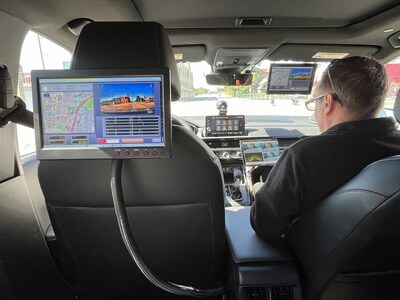
Honda has been advancing development of its prototype Proactive Roadway Maintenance System since 2021. During the pilot, ODOT team members drove Honda test vehicles equipped with advanced vision and LiDAR sensors to monitor approximately 3,000 miles of roads in central and southeastern
- Worn or obstructed road signs
- Damage to guardrails and cable road barriers
- Pothole development, including size and location
- Condition of shoulder drops, including the percentage and depth of drop off
- Insufficient roadway striping that affects the functionality of some driver-assistance features, such as lane-keeping assist functions
- Rough road quality, regardless of the vehicle's age or condition
As the Honda test vehicles detected the condition of critical roadway surfaces, pavement markings, and roadside assets, ODOT operators were able to review the deficiencies in real time through web dashboards developed by Honda and Parsons. ODOT used the data to cross-reference its regular visual inspections.
- Data collected by the vehicles was processed using Edge AI models, transmitted to a Honda cloud platform for analysis, and integrated into Parsons iNET® Asset Guardian system.
- This implemented a pipeline capable of automatically generating prioritized work orders for ODOT maintenance teams.
- Work orders can be grouped by severity and proximity, with the iNET® Asset Guardian system streamlining workflows to enhance efficiencies across field maintenance operations.
i-Probe provided data validation as well as analysis expertise for road roughness and lane marking conditions. The
Pilot Results: Highly Accurate Detection of Road Deficiencies
The pilot program covered a total of approximately 3,000 miles. Results verified that automated detection with the Proactive Roadway Maintenance System achieved high accuracy for signs, guardrails and shoulder drop-offs, and delivered strong pothole detection across most road types:
- 99% accuracy for damaged or obstructed signs
- 93% accuracy for damaged guardrails
- 89% average accuracy for potholes
An AI feedback loop pipeline was built that enabled ODOT team members to flag misdetections, helping the system learn and improve over time.
Insights from testing over approximately 3,000 miles showed that only a small percentage of roads had insufficient lane markings, suggesting that restriping schedules could be optimized. Vehicle sensor data also reliably measured road roughness levels and provided valuable insights for maintenance planning. The Proactive Roadway Maintenance System further detected high‑severity shoulder drop‑offs that were difficult to identify through routine visual inspection, successfully flagging these conditions across approximately 3,000 miles of roadway.
By reducing the need for manual inspections, the system enhances safety for maintenance crews and minimizes their exposure to traffic hazards. The project team estimates that automated road condition detection could save ODOT over
As part of the next phase of testing, the project team is exploring ways to scale the prototype Proactive Roadway Maintenance System for real-world operations. In the future, Honda aims to empower its customers to contribute to safer, better roads through anonymized data sharing from their vehicles. This community-focused approach creates a sense of shared ownership at the road operation level, enabling drivers to move from simply using the roadways to actively improving them.
The project was driven by a strong public, private and academic collaboration, bringing together complementary expertise from each partner to deliver impactful results. More information on the project team is available here.
Executive Comments:
"At the heart of this technology is our shared goal to keep our roadways safe for all users," said
Honda:
"This pilot of the Honda Proactive Roadway Maintenance System empowers drivers to play an active role in creating safer roadways and communities while helping agencies like ODOT improve maintenance operations," said
i-
"What makes this project meaningful is how everyday vehicle sensor data can be translated into decision-ready insights for transportation agencies," said
Parsons:
"This project gave us a deeper understanding of the challenges transportation agencies face in maintaining critical roadside assets and the multiple operational layers involved in identifying, tracking, and managing maintenance activities," said
"We are introducing cutting-edge technologies for evaluating and maintaining transportation infrastructure, enabling agencies to make more timely and informed decisions," said UC Professor
Honda Commitment to Safety
Honda is committed to further advancing safety for everyone sharing the road, which is captured in the Honda global safety slogan "Safety for Everyone." The company has established a global goal to achieve zero traffic collision fatalities involving Honda motorcycles and automobiles by 2050. To achieve this goal, Honda is expanding its focus beyond advanced safety and driver assistive technologies alone, to include efforts to augment safety awareness to modify driver behavior and improve the traffic safety ecosystem by working with government, industry and community partners.
Honda operates two of the world's most sophisticated crash-test facilities in
Advanced passive safety features include the proprietary Honda Advanced Compatibility Engineering™ (ACE™) body structure and next-generation driver and passenger front airbag technology, which are designed to provide a high level of collision protection for occupants. Advanced active safety and driver-assistive systems found in Honda Sensing® and AcuraWatch™ technologies, now on over 10 million on
Learn more at https://www.honda.com/safety.
Important Notice
Although the information included in this press release is accurate as of the date of publication, this information is subject to change at any time without notice.

 View original content to download multimedia:https://www.prnewswire.com/news-releases/honda-and-driveohio-complete-pilot-of-nations-first-proactive-roadway-maintenance-system-aimed-at-creating-safer-roads-302673964.html
SOURCE Honda
